 If you’ve been online for more than a minute, your feed is probably flooded with pro-AI articles and tips about getting the most out of this absolutely perfect, never-fails, product that can solve world hunger, vibe code the perfect social media platform, and do your job so you don’t have to. I know. AI is truly a wonder to behold at all times. Everyone should use it. Constantly. For everything.
But there is one thing that the one percent still doesn’t want you to know. They’re hiding it from you Neo. It’s this one secret that has kept them wealthy and in places of power for years. That’s right; I’m talking about potatoes. Yes, the humble potato. Everyone at the top knows that it is the ultimate secret to success. And it’s about time we started giving the humble potato the credit it deserves.  I was at SXSW the year that Yamtrader.com launched. The booth was a giant yam. People were invited to get a $50 gift card for trading in an actual, physical yam. It was weird and Yamtrader was something people talked about.
I have rarely seen its level of absurdity matched in modern marketing, though many have tried. Behind the whole operation was Tri-Net, an HR, payroll company that provided services for startups. The company was trying to showcase what a bad startup was, but that’s beside the point.  Credit: CBS (from the 2026 Grammy Awards show, "In Memoriam" segment, which was amazing!) For many of today’s musicians, being on live, nationally televised awards shows comes about as naturally as a cat, walking calmly, through a busy dog park." Nowadays, a broadcasted, live awards show is, as the youth today say, generally “fighting for its life." If you've watched live awards shows for decades, much of the polish and presentation has suffered in recent years. I recently saw a post from a mutual about how the Grammy Awards have changed since the late 2010s, and how artists aren't appearing as disciplined and intentional. Now artists just “appear.” As someone who has studied broadcasting and music specifically, I have my reasons as to why this is.
In the Age of AI Our Relationship to Creativity Matters - and other Feral PR Consultant insights12/14/2025
 A Random Person’s LinkedIn Post: "Look what I made with generative AI!"
Me: * Looks at content. Looks at profile. Rolls eyes. * They're an AI influencer, helping companies go from idea to product in record time. They have no background in creating. I'm guessing these are the same people who didn't take art classes in school, didn't go to art shows, have never gone to a gallery or museum and been swept away emotionally by a work of art that spoke to them. They don't have a relationship with art, so they don't know art when they see it. The Problem: When you refuse to acknowledge people's relationship with art, you're at risk for losing your relationship with empathy and the best of humanity. I Fixed the TIME Magazine 2025 Cover So You Don’t Have To - musings from a Feral PR Consultant12/13/2025
 You’ve probably seen the 2025 TIME Magazine Person of the Year cover, elevating tech titans as the Architects of AI, on the humble I-beam.
As a marketer and PR professional who has studied propaganda, my heaviest takeaway is this: TIME has been compromised, again. TIME is not reflecting or reporting on reality. It’s trying to create a new one And who does that benefit? How does that change how people in the future think about history? The picture suggests:
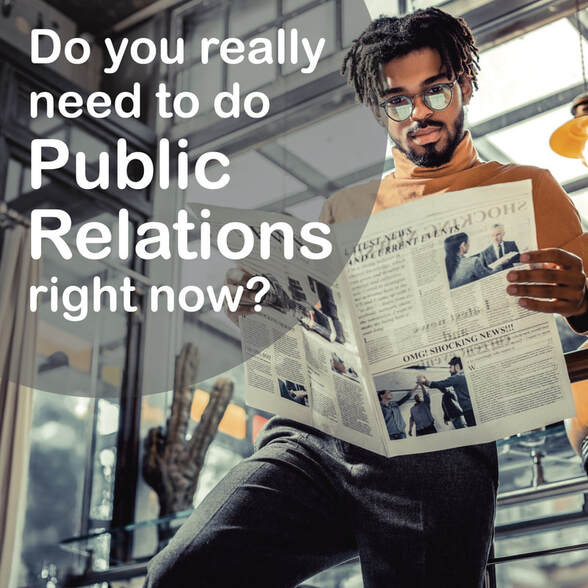 “We’re just not ready for PR,” or, “We’re at a point where we don’t need PR,” are things I’ve heard potential clients say to me, and some of those clients were right. They didn’t need PR at that time. And, while not paying thousands a month for public relations can save you money, doing so at the wrong time can cost you in the loss of customers, failing brand loyalty, and possibly the downfall of your entire business or organization.
So how do you, the founder or manager of a startup, nonprofit, or emerging brand, actually know when you need PR? I’ve set up some questions to help you decide for yourself if your brand actually needs PR right now.  By Jennifer L. Jacobson, Founder of Jacobson Communication
What if I told you I could save your new startup tens of thousands of dollars on public relations costs, and position your unique brand for success better than big-box, bulky, one-size-fits-all PR firms? I’d have your attention, right? Well, it’s true. I want your startup to succeed, and I want public relations to play a big role in that success. In my decades in public relations, I’ve worked with hundreds of startups across all levels; from brand new entrepreneurial passion projects seeking patents, to established startups seeking acquisition. At some point they all need public relations, but this can be an expensive, confusing, and time-consuming process.  AI offers a tempting prospect; a shorter, less labor-intensive path to written content creation. What marketing director wouldn't want that? Yet, while there are times when using AI can help you see things differently and while there are times when it might clarify your understanding of a complex subject, when it comes to the creative and strategic writing side of comms, I strongly caution you against the use of AI.
On the surface it looks harmless; you’re going to type in some prompts and use what AI spits out to make a press release. But don’t be fooled. 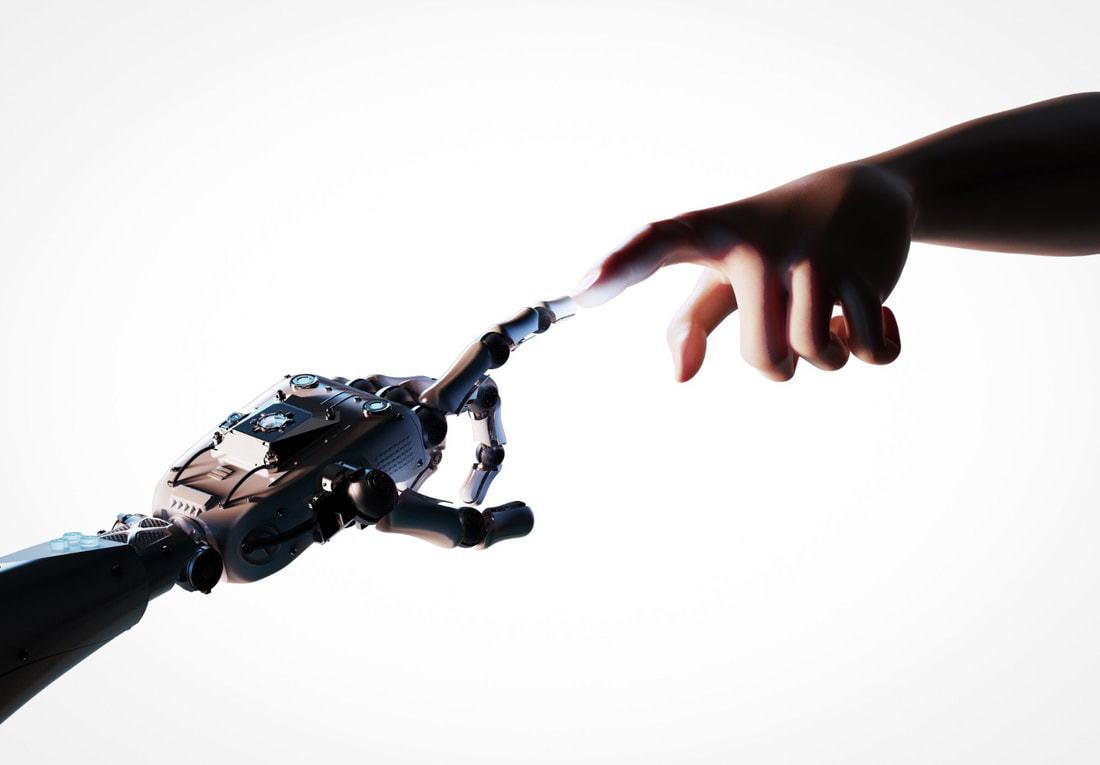 As a PR and communications professional in the tech and entertainment space, and an author, musician, and artist, I know the value of real humans, working together to create new things or solve complicated problems. There is a spark that happens when a focused group gets together to make something new or find solutions to seemingly impossible situations. There’s almost a magic to it and that excitement has a way of building on itself and encouraging others. I also feel there are a number of reasons that this human-driven process is greatly undermined by the unchecked use of generative AI in areas such as enterprise, education, physical health, and mental health.
 Your PR Director can mean the difference between success and failure for your startup. They can help you get noticed, which may lead to future funding, lucrative business partnerships, and more customers. Good PR can open doors that were previously closed for your brand. It’s important to hire well.
As a PR Professional, I’ve worked with hundreds of startups and heard many stories. I’ve also seen a lot of PR mistakes that I want you to learn from. Here are some of the most common. 1. They Hire Someone From a Big Company or PR Agency Hiring a PR person from a large company is a gamble. I’ve seen several startups boast that their PR Director was from Google or Facebook or even a large PR firm, only to let them go six months later when they realized that person wasn’t able to function without a larger budget and team. |

|
Jacobson Communication is a one-woman PR firm that delivers game-changing public relations and brand development for extraordinary clients with a story to share.
For brands and causes working toward positive change; nonprofits, startups, do-gooding tech companies, outdoor brands, entertainment brands, theme parks, musicians, authors, special causes and more. I work with brands at every state, from concept to internationally recognition. Offering strategy, pitch-crafting, media relations that scale, brand engagement, advisement, and more! I also work with PR firms and internal PR teams who need out-of-the-box additional help. The Generative AI Skeptic
A Word About Generative AI, in Regards to Comms and Creativity
One of the values I bring to my clients is my ability to grasp the "big picture" and align it with the public's current moods, thought patterns, and needs. I believe my specific brain, my heart, my experience, and my personal methodology are what separates me from those who rely on what generative AI feeds them. I do not use generative AI, nor do I generally endorse its use for writing and creation in public relations, the music industry, or art. To all my fellow comms and creatives out there; stay human! Learn more about my thoughts on generative AI here: 
Editor's Note:
If you're not creating and sharing free speech, thought-piece, satirical graphics designed to point out when the media gets something drastically wrong, are you even on the internet? |
AI AND POTATOES
We Can Poison The Well Together

AI is stealing our data at the behest of mega-investment in a race where no one wins. So, is AI takeover really inevitable, or is it hype?
Will it really replace 80% of human jobs? How might one render it ridiculous and useless. Land AcknowledgementAcknowledgement to the southern Lushootseed-speaking Coast Salish Indigenous Peoples whose land I live and work on.
This land also includes the traditional land and waterways of the first people of Seattle, the Duwamish People of past and present. It is with honor and gratitude to the land itself, the plants, animals, and the Duwamish Tribe that I practice my work. This land is also on and adjacent to the traditional homelands and waterways of the Puyallup Tribe. The Puyallup people have lived on and stewarded these lands since the beginning of time and continue to do so today. I recognize that this land acknowledgement is one small step toward true allyship, and I commit to uplifting the voices, experiences, and histories of the Indigenous people of this land and beyond. To learn more about the Puyallup Tribal Language program, visit: https://www.puyalluptriballanguage.org Personal StatementIt is my hope that we all deepen our understanding, awareness, and relationship to where we live in the world, and that we, individually and as a group, do our part to heal the wounds caused by genocide, enslavement, displacement, and other such atrocities, many of which have been intentionally carried forward into our present day and built into modern systems of power. Here is a list of books that might help you on your way to decolonizing the mind.
Are You Ready to Tell Your Story?If so, have a cookie. Click below.

Not Yet Ready to Tell Your Story?That's okay too. Pet the cat.


Copyright 2026 Jennifer Jacobson
Jacobson Communication, The Feral PR Consultant Please know that my thoughts are my own, and not necessarily those of my clients or those I work or have worked with. May your thoughts also be your own. |