In the Age of AI Our Relationship to Creativity Matters - and other Feral PR Consultant insights12/14/2025
 A Random Person’s LinkedIn Post: "Look what I made with generative AI!"
Me: * Looks at content. Looks at profile. Rolls eyes. * They're an AI influencer, helping companies go from idea to product in record time. They have no background in creating. I'm guessing these are the same people who didn't take art classes in school, didn't go to art shows, have never gone to a gallery or museum and been swept away emotionally by a work of art that spoke to them. They don't have a relationship with art, so they don't know art when they see it. The Problem: When you refuse to acknowledge people's relationship with art, you're at risk for losing your relationship with empathy and the best of humanity. I Fixed the TIME Magazine 2025 Cover So You Don’t Have To - musings from a Feral PR Consultant12/13/2025
 You’ve probably seen the 2025 TIME Magazine Person of the Year cover, elevating tech titans as the Architects of AI, on the humble I-beam.
As a marketer and PR professional who has studied propaganda, my heaviest takeaway is this: TIME has been compromised, again. TIME is not reflecting or reporting on reality. It’s trying to create a new one And who does that benefit? How does that change how people in the future think about history? The picture suggests:
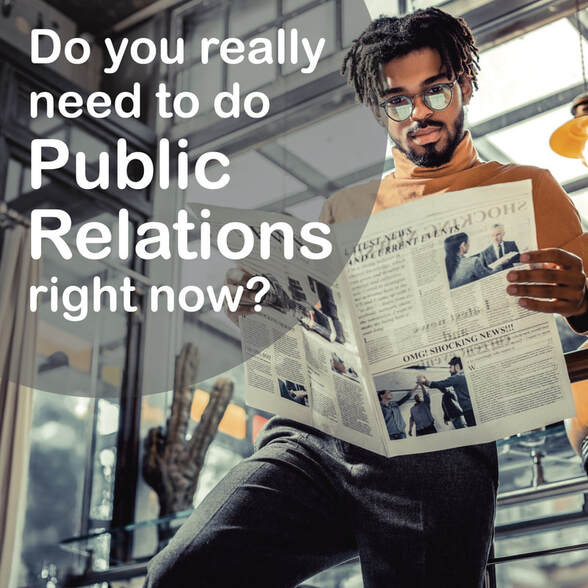 “We’re just not ready for PR,” or, “We’re at a point where we don’t need PR,” are things I’ve heard potential clients say to me, and some of those clients were right. They didn’t need PR at that time. And, while not paying thousands a month for public relations can save you money, doing so at the wrong time can cost you in the loss of customers, failing brand loyalty, and possibly the downfall of your entire business or organization.
So how do you, the founder or manager of a startup, nonprofit, or emerging brand, actually know when you need PR? I’ve set up some questions to help you decide for yourself if your brand actually needs PR right now. 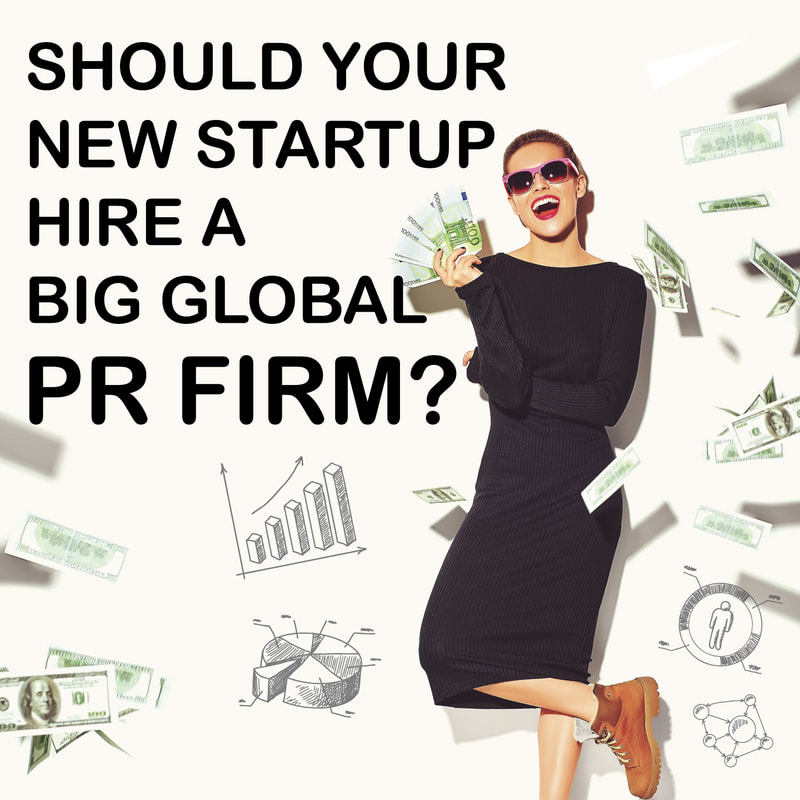 By Jennifer L. Jacobson, Founder of Jacobson Communication
What if I told you I could save your new startup tens of thousands of dollars on public relations costs, and position your unique brand for success better than big-box, bulky, one-size-fits-all PR firms? I’d have your attention, right? Well, it’s true. I want your startup to succeed, and I want public relations to play a big role in that success. In my decades in public relations, I’ve worked with hundreds of startups across all levels; from brand new entrepreneurial passion projects seeking patents, to established startups seeking acquisition. At some point they all need public relations, but this can be an expensive, confusing, and time-consuming process.  AI offers a tempting prospect; a shorter, less labor-intensive path to written content creation. What marketing director wouldn't want that? Yet, while there are times when using AI can help you see things differently and while there are times when it might clarify your understanding of a complex subject, when it comes to the creative and strategic writing side of comms, I strongly caution you against the use of AI.
On the surface it looks harmless; you’re going to type in some prompts and use what AI spits out to make a press release. But don’t be fooled.  As a PR and communications professional in the tech and entertainment space, and an author, musician, and artist, I know the value of real humans, working together to create new things or solve complicated problems. There is a spark that happens when a focused group gets together to make something new or find solutions to seemingly impossible situations. There’s almost a magic to it and that excitement has a way of building on itself and encouraging others. I also feel there are a number of reasons that this human-driven process is greatly undermined by the unchecked use of generative AI in areas such as enterprise, education, physical health, and mental health.
 Your PR Director can mean the difference between success and failure for your startup. They can help you get noticed, which may lead to future funding, lucrative business partnerships, and more customers. Good PR can open doors that were previously closed for your brand. It’s important to hire well.
As a PR Professional, I’ve worked with hundreds of startups and heard many stories. I’ve also seen a lot of PR mistakes that I want you to learn from. Here are some of the most common. 1. They Hire Someone From a Big Company or PR Agency Hiring a PR person from a large company is a gamble. I’ve seen several startups boast that their PR Director was from Google or Facebook or even a large PR firm, only to let them go six months later when they realized that person wasn’t able to function without a larger budget and team.  For many theme parks Spring is a dormant time of year when the worst of the weather passes. But all should not be quiet in your marketing and PR departments. Spring is a great time to jumpstart many activities that will pay off in the busy season.
Here are 12 activities you can start now to prepare your park for peak season. 1. Map Out Your “Big Announcements” and stories for the Year Do you have a fantastic summer music lineup you’ll need to promote? How about a new ride opening or attraction? Whatever it is, map it out and put it on your editorial calendar now so you have time to plan for and promote it. 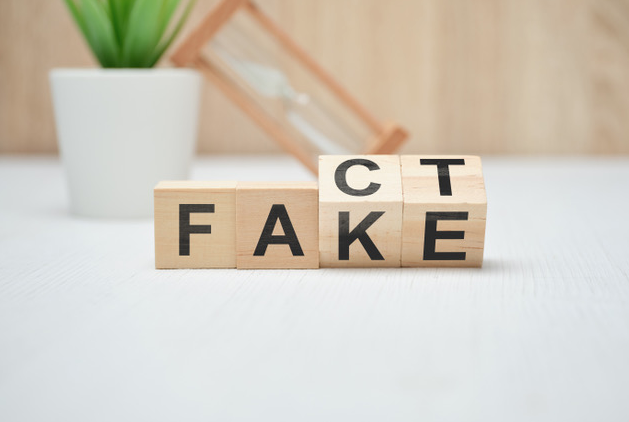 Hiring a PR firm is a big step for any new or growing brand. If you've reached this point, congratulations, you’ve gotten farther than a lot of other brands ever have. Here are seven common myths to avoid when considering hiring a PR firm.
1. The Best PR Firms Are Really Big Choosing a big PR firm that works with big clients can be a bad choice for new and emerging brands for several reasons. Big PR firms are expensive for cost-conscious brands. Unless they have a “small brand” department big PR firms are mainly focused on their big, name-brand clients, because they look good, and they bring in most of the money. Most big PR firms don’t specialize in the nuances of startups. While they may have fancy reports and a fleet of underlings to meet with you regularly, big PR firms don’t usually understand the specific needs of budding entrepreneurship associated with startups. You’re better off looking for PR firms that specialize in, and have results for companies of a similar size and focus to yours. 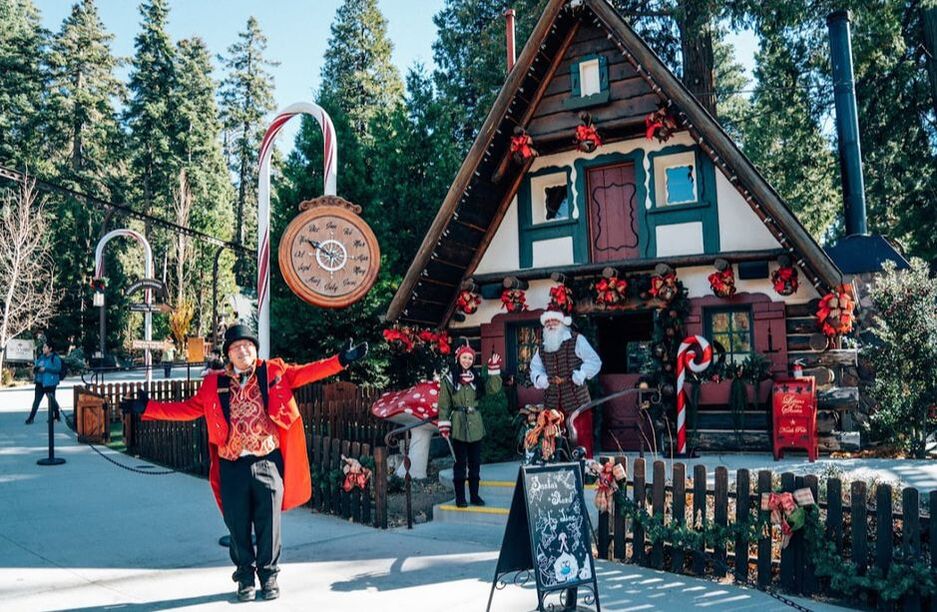 Santa's House at SkyPark as it stands today in San Bernardino. Santa’s Village in Scotts Valley California is the abandoned amusement park of my dreams. It closed the year I was born, but that didn’t stop my lifelong obsession with it, nor did it stop me from working for Santa’s Village today, but let’s not start with the end of the story just yet. By the time I first found out about the enchanting Bay Area Christmas theme park, it was only a memory, and someone else's memory at that.
To put it in Dickensian terms; Santa’s Village was dead to begin with; as dead as an abandoned theme park could be. It was one of three Santa’s Villages across the country; the first franchised amusement park. But the heydays of mid-century modern luxury dissolved into the gas crisis and economic despair of the 1970s. The Santa’s Village Corporation dissolved in the late 70s. The parks went their separate ways and eventually all closed. And you might assume this is where the story of Santa's Village stops, but you'd be wrong. |

About Jacobson Communication
|
Jacobson Communication specializes in delivering game-changing PR and earned media for extraordinary clients with a story to share.
I work with nonprofits, outdoor brands, tech companies, entertainment brands, startups, theme parks, musicians, authors, nonprofits, special causes and more. From at-scale media relations, and brand engagement, to positive social change, you'll be surprised what better communications can do for you. The Generative AI Skeptic
|

Land AcknowledgementAcknowledgement to the southern Lushootseed-speaking Coast Salish Indigenous Peoples whose land I live and work on.
This land also includes the traditional land and waterways of the first people of Seattle, the Duwamish People of past and present. It is with honor and gratitude to the land itself, the plants, animals, and the Duwamish Tribe that I practice my work. This land is also on and adjacent to the traditional homelands and waterways of the Puyallup Tribe. The Puyallup people have lived on and stewarded these lands since the beginning of time and continue to do so today. I recognize that this land acknowledgement is one small step toward true allyship, and I commit to uplifting the voices, experiences, and histories of the Indigenous people of this land and beyond. To learn more about the Puyallup Tribal Language program, visit: https://www.puyalluptriballanguage.org Personal StatementIt is my hope that we all deepen our understanding, awareness, and relationship to where we live in the world, and that we, individually and as a group, do our part to heal the wounds caused by genocide, enslavement, displacement, and other such atrocities, many of which have been intentionally carried forward into our present day and built into modern systems of power. Here is a list of books that might help you on your way to decolonizing the mind.
Are You Ready to Tell Your Story?If so, have a cookie. Click below.
Not Yet Ready to Tell Your Story?That's okay too. Pet the cat.

Copyright 2026 Jacobson Communication
Jennifer Jacobson AKA The Feral PR Consultant Please know that my thoughts are my own, and not necessarily those of my clients or those I work or have worked with. May your thoughts also be your own. Stay feral! |